
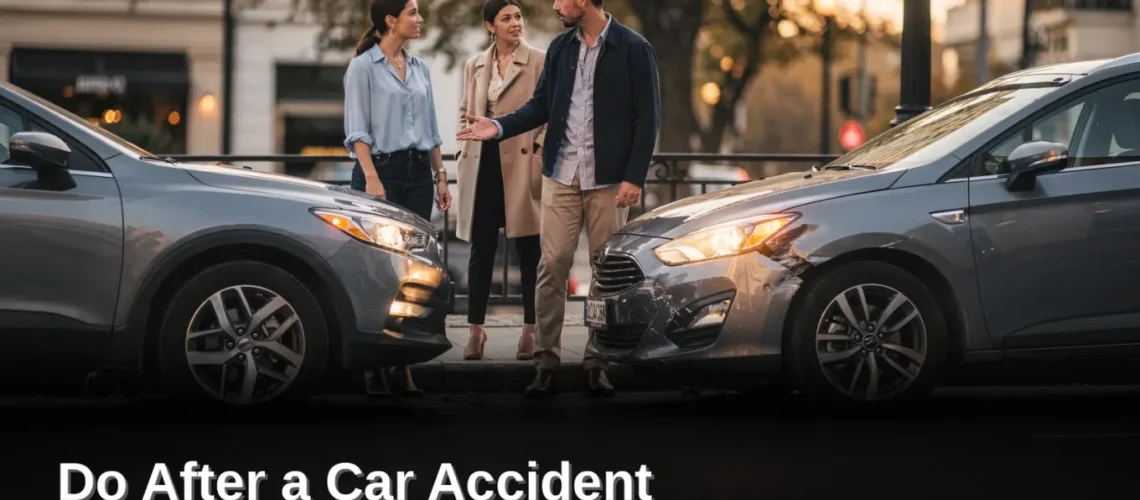
Your first step after a Topeka crash is checking for injuries and calling 911. Kansas law requires you to stop. Get medical care right away and make sure the crash is reported to police. Kansas PIP benefits cover medical bills regardless of fault. Contact a Topeka car accident lawyer before speaking with insurers.
Key Takeaways
- Kansas law requires every driver involved in a crash to stop and stay at the scene.
- Call 911 if anyone is injured, an airbag deployed, or a vehicle can’t be driven. The officer who responds writes your Topeka accident report.
- Kansas PIP pays medical bills no matter who caused the crash. It does not pay for pain and suffering.
- Talk to a Patton & Patton Chartered attorney before you speak with any insurance company.
What should you do immediately after a crash?
Stop your vehicle and stay at the scene. Kansas law requires every driver involved in a crash to remain there, and leaving can turn a fender-bender into a legal problem of your own. Then check yourself and your passengers for injuries. If anyone is hurt, an airbag deployed, or a vehicle can’t be driven, call 911. Those situations are covered in more detail in the section on reporting the accident below.
What if my car is blocking traffic?
Move it if you can. When no one is injured and the vehicles are drivable, pull to the side of the road and turn on your hazard lights. A disabled vehicle creates a secondary collision risk. If the car will not move, turn on the hazard lights and set out warning flares or reflective triangles. Do not leave the scene. Find a safe place nearby and wait for emergency services.
What if I am trapped inside the vehicle?
Stay where you are. Keep your seatbelt on, turn on your hazard lights, and call 911. If you have a spinal or internal injury, moving can make it worse, and emergency responders have the tools to get you out safely. Until they arrive, stay still and keep the hazards on so other drivers can see you.
Should I help injured passengers or other drivers?
Yes. Help anyone who is hurt, but don’t move an injured person unless something life-threatening, like a fire or rising water, leaves no other choice. Moving someone the wrong way can cause permanent harm, so leave extraction and stabilization to the paramedics.
Once everyone is safe, start thinking about the record. Medical records made in the first hours become evidence, and so do statements you make at the scene. The police report will note the conditions, what witnesses said, and how the crash happened. If the other driver drove off, your uninsured motorist coverage may apply to the hit-and-run, which can keep you from paying out of pocket for someone else’s decision. Write down and photograph what you can while it is fresh.
How do you report the accident to police?
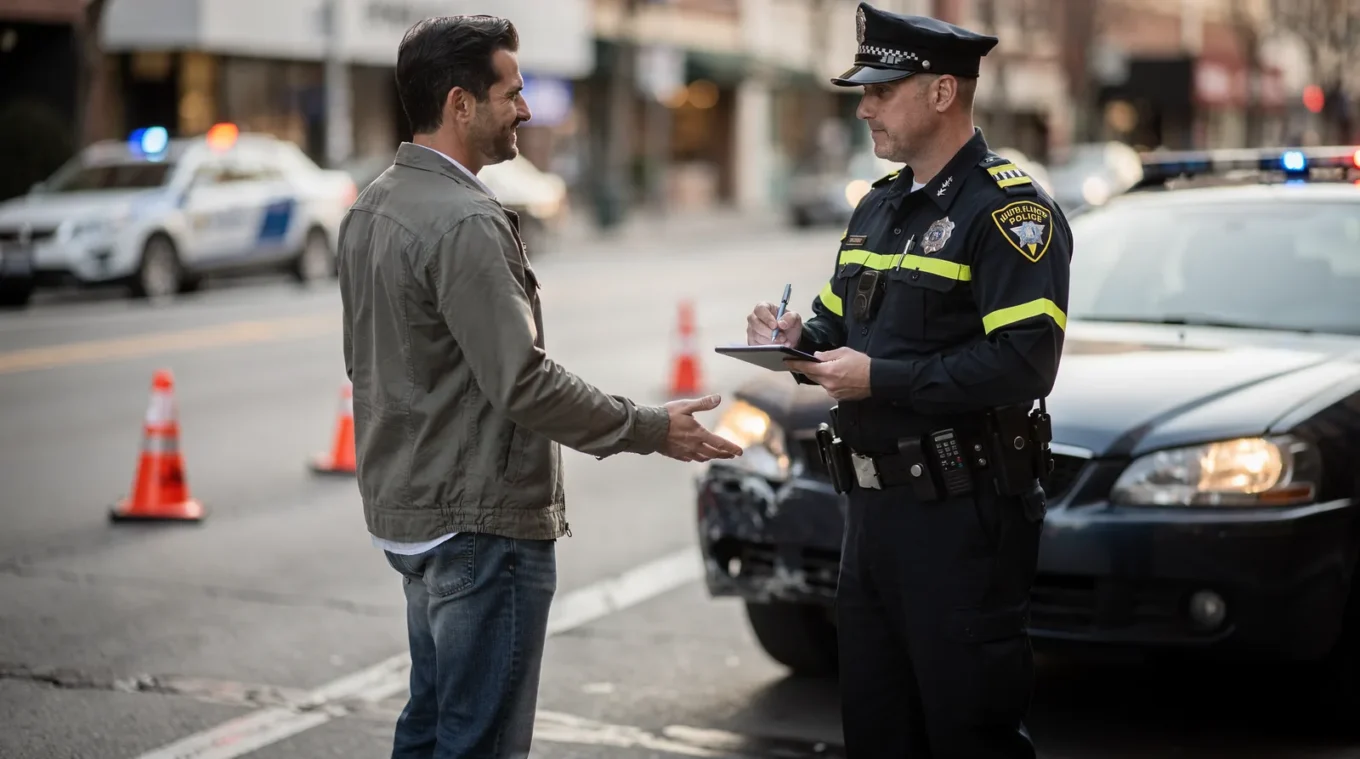
Kansas law (K.S.A. 8-1604) requires a crash to be reported to the nearest police agency by the quickest available means when anyone is injured or killed or the apparent property damage is $1,000 or more, unless an officer is already at the scene. Which agency you reach depends on where the crash happened. Inside Topeka city limits, it is the Topeka Police Department. On roads elsewhere in Shawnee County, it is usually the Shawnee County Sheriff’s Office. On I-70, I-470, US-75 and other highways, the Kansas Highway Patrol often responds.
Calling 911 from the scene is the simplest way to meet that duty. The dispatcher routes the call to the right agency, and the responding officer writes the crash report you will need later.
When should you call 911?
Call 911 from the scene if any of the following is true.
- Someone is hurt. Check yourself and every passenger. Pain, bleeding, or disorientation in anyone is enough. Don’t wait to see whether symptoms get worse.
- An airbag deployed. Airbags go off in hard impacts. Even if everyone feels fine, a crash with that much force should get a police response and a formal report.
- A vehicle can’t be driven. If any car involved can’t be safely driven off the road, call for an officer. A disabled vehicle in a traffic lane is a hazard and needs to be documented.
What happens if you don’t report the crash?
You may end up with no official record of what happened. Without a police report, the other driver’s version of events can become the only account an insurer sees, and insurers lean heavily on police documentation when they assign fault.
Evidence doesn’t wait for you, either. Witnesses leave, people forget details, and the debris gets swept up. A crash that looked minor at the time can turn into a disputed claim weeks later, and without a report even a strong case is harder to prove. A lawyer has far more to work with when the crash was properly reported.
What information should you give the dispatcher?
Stay calm and provide clear, concise answers. The dispatcher needs your exact location first. Give the nearest cross streets or mile markers if you’re on a highway. Describe the number of vehicles involved and whether anyone appears injured. Mention hazards like leaking fuel or blocked lanes. Stay on the line until the dispatcher tells you to hang up.
Why is the Topeka accident report important?
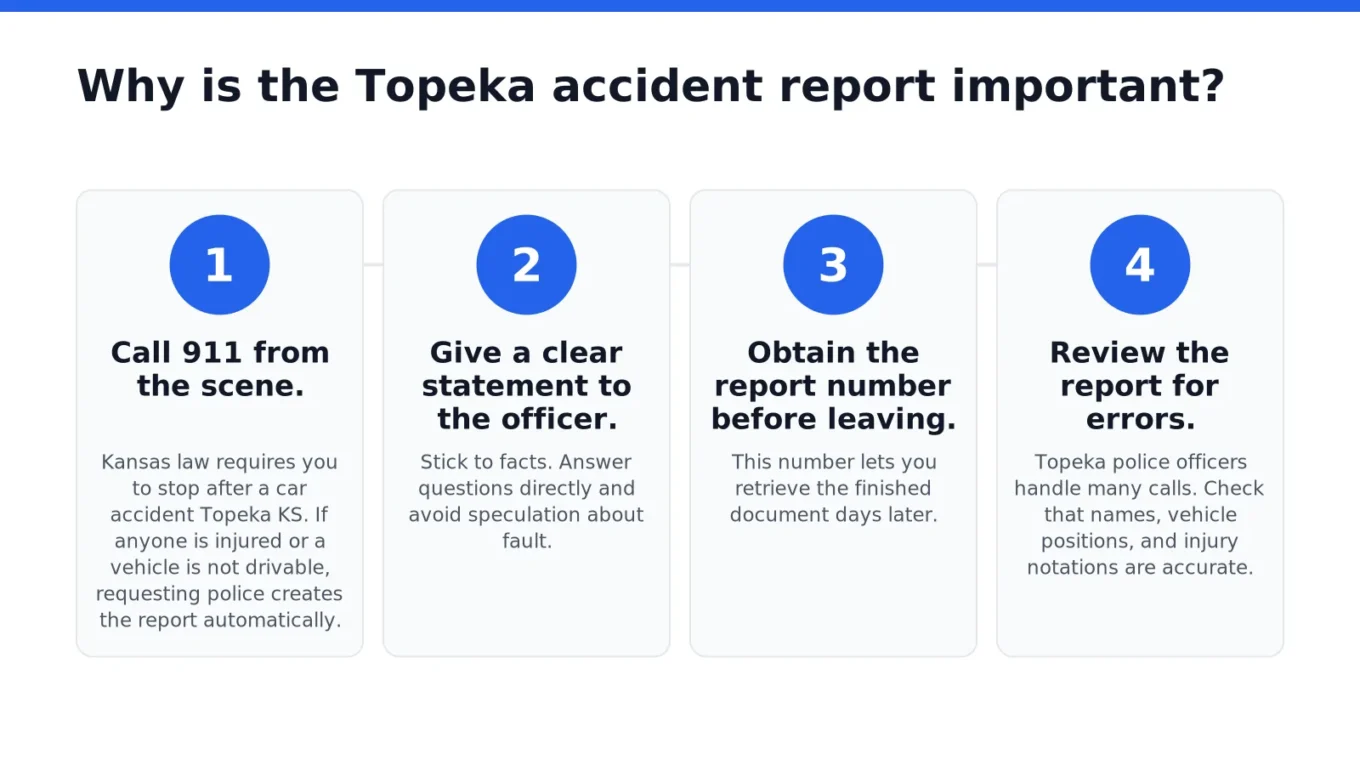
Your Topeka accident report is the official record of the collision. Insurers will rely on it to decide what happened and who was at fault, and so will your lawyer if you bring a claim. Whether the crash was minor or serious, get a copy early and read it carefully.
How does the accident report affect my claim?
The report captures details while memories are fresh and the evidence is still there. Without it, it comes down to your memory against the other driver’s. A few steps help make sure the report is accurate and that you can get it later.
- Get police to the scene. When you call 911 for an injury or a vehicle that can’t be driven, the responding officer starts the report right there.
- Give the officer a clear statement. Stick to facts, answer the questions asked, and don’t speculate about fault.
- Get the report number before you leave. You’ll need it to request the finished report a few days later.
- Check the report for errors. Officers handle a lot of calls. Make sure the names, vehicle positions, and injury notes are right.
Once the report is ready, a lawyer can go through your accident report for details that support liability and for discrepancies worth looking into.
Does the report determine who pays my medical bills?
Not by itself, though it matters. Kansas is a no-fault insurance state, so your own Kansas PIP coverage pays your first medical bills regardless of fault. The report counts when your injuries go beyond what PIP covers. It documents the circumstances an attorney needs to pursue additional recovery, and without it that path gets much narrower.
What medical care should you seek first?
Get medical care quickly after a car accident in Topeka, for your health first and your claim second. When treatment is delayed, insurance adjusters start asking whether the injuries came from the crash at all.
If anyone is badly hurt, the 911 steps above come first. After that:
- Get checked even if your symptoms seem minor. Adrenaline masks pain. A stiff neck at the scene can turn out to be a herniated disc a few days later.
- Take the ambulance if paramedics recommend it. Turning down transport leaves a gap in your medical records, and insurers use those gaps.
- Go straight to an emergency room or urgent care. Don’t stop at home first. An unbroken chain of care is easier to connect to the crash.
- Tell every provider about every symptom. That includes dizziness, numbness, blurred vision, and trouble concentrating, which can be signs of a concussion or nerve damage.
Should I see a doctor even if I feel fine?
Yes. Some injuries take hours or days to show symptoms, and whiplash, soft-tissue damage, and traumatic brain injuries are often missed at first. An exam creates a record that ties your condition to the crash. Without that record, it is much harder to prove the accident caused your injury.
What if I cannot afford the emergency room?
Use your PIP coverage. Kansas law requires your auto insurer to provide personal injury protection (PIP), and it pays your first medical bills no matter who was at fault. Get treated now and deal with the long-term costs once you’re stable. A lawyer can explain how PIP works alongside your other coverage after treatment is underway.
How does Kansas PIP cover your bills?
Kansas PIP pays your medical expenses after a crash regardless of who caused it. Every auto policy in Kansas has to include it, and it covers you, your passengers, and members of your household who were hurt in the accident.
Benefits start right away. Reasonable medical treatment gets paid without waiting for anyone to decide fault or settle a liability dispute, which matters when ambulance fees, ER visits, and follow-up care start arriving within days.
What expenses does Kansas PIP pay for?
PIP benefits cover several categories of loss:
- Medical expenses: Hospital stays, doctor visits, diagnostic tests, prescription medications, and rehabilitation services
- Lost earnings: A portion of the income you cannot earn while recovering
- Replacement services: Help with household tasks you cannot perform during recovery
- Funeral and survivor benefits: Paid to the family if a crash is fatal
PIP does not pay for pain and suffering. Compensation for pain, suffering, and other non-economic losses comes only from a claim against the at-fault driver, once your injuries meet the Kansas threshold for stepping outside no-fault.
The coverage applies whether you were driving, riding as a passenger, or struck as a pedestrian. Your own policy pays first, before any other insurance.
How do you access your PIP benefits after a Topeka car accident?
To start your PIP benefits:
- Get medical care right away. PIP requires your injuries to be documented by a licensed provider.
- Tell your insurance company promptly. Report the crash and say you need to open a PIP claim.
- Send in your medical bills and proof of lost wages. Your insurer needs records of the treatment you received and the work you missed.
- Keep track of every expense. Hold on to bills, receipts, and letters. Missing paperwork slows down payment.
PIP pays up to your policy limits. After that, your health insurance or the at-fault driver’s liability policy may pick up the cost. A lawyer can help you sort out which one applies so you aren’t left with a gap in coverage while you recover.
How should you talk to insurance adjusters?
Expect an insurance adjuster to call soon after the crash. The questions will sound routine, but what you say goes into the file and can affect what your claim is worth. You don’t have to answer everything on that first call.
What should you say when the adjuster first calls?
Keep it short and factual: your name, the date of the crash, and where it happened. Don’t go into detail about your injuries or guess about fault. Adjusters record these calls, and a casual remark like “I’m fine” can be used later to argue you weren’t hurt.
- Confirm only the basics: who you are, and when and where the accident happened.
- Say you’re still gathering information and will follow up.
- Decline to give a recorded statement until you know the full extent of your injuries.
- Get the adjuster’s name, phone number, and claim number, and write them down.
Should you accept an early settlement offer?
No. Early offers rarely account for injuries that show up days or weeks later. Accepting a settlement releases the insurance company from further liability, so if you later find out you have a herniated disc or need surgery, you can’t go back and ask for more. Talk to a lawyer before you respond to any offer.
What documents should you never sign right away?
Don’t sign anything from an insurance company until you’ve talked to a lawyer. Be especially careful with medical authorization forms. They often give the insurer access to your entire health history, not only the records from this crash, and an adjuster may go through years of doctor visits looking for a pre-existing condition to blame for your pain.
Before you sign a release or hand over records, it helps to understand what adjusters look for when they review a claim. Patton & Patton Chartered offers a free case evaluation with no obligation if you’d like an attorney to look at the paperwork first.
When should you call a Topeka car accident lawyer?
If you were hurt, call as soon as you can, and before you talk to any insurance company. Evidence starts to disappear within days, and the adjuster is already building a file aimed at paying as little as possible.
What signs indicate you need legal help right now?
Call a lawyer right away if:
- You suffered any injury requiring medical treatment
- The other driver disputes fault
- An insurance adjuster asks for a recorded statement
- You missed work because of the crash
- Medical bills are arriving and you do not know who pays
In each of these situations an insurer may look for reasons to pay less, and an attorney can push back on that for you.
How does direct attorney access change your case?
At Patton & Patton Chartered, a family personal injury firm with offices in Topeka and Lenexa, you talk with your attorney directly. That helps when a question comes up and the decision can’t wait.
The first conversation is a free case evaluation with no obligation. If the firm does not believe it can add real value to your claim, it will tell you so. Cases are handled on a contingency fee.
What does a lawyer handle that you should not handle alone?
- Talking to insurers. Your attorney speaks for you, so nothing you say gets turned into an admission.
- Gathering evidence. Police reports, witness statements, and medical records are collected and preserved.
- Valuing the claim. Future medical costs and lost earning capacity are worked out from the records.
- Negotiating, or going to court. Your attorney negotiates for a fair resolution and prepares for trial if it comes to that.
You can handle all of this yourself, but each one is a place where an early mistake can cost you later.
What mistakes should you avoid after a crash?
Most of the costly mistakes happen in the first few minutes, when you’re shaken up and running on adrenaline. Two come up again and again: leaving too soon and saying too much.
What is the most dangerous mistake right after a collision?
Leaving the scene. Kansas law requires you to stop after any crash, and that holds even if your car won’t move. Turn on your hazards, get somewhere safe nearby, and wait for emergency services to arrive.
How do you avoid saying the wrong thing at the scene?
Once you’ve stopped, checked on everyone, and called 911 if needed, keep conversations at the scene short. Don’t talk about fault with the other driver or with bystanders. When you speak with the officer, stick to what you saw, because guesses about speed or who caused the crash end up in the report. It’s also better not to tell anyone you’re fine. You may not know yet.
Shock makes it easy to say something offhand that an adjuster later uses against you. If the other driver’s insurer calls, a Topeka car accident lawyer can take that conversation for you.
FAQ
What should I do immediately after a car accident in Topeka?
Stop, check everyone for injuries, and call 911 if anyone is hurt or a vehicle cannot be driven. Then get medical care, get the report number from the officer, and talk to a lawyer before giving the other driver’s insurer a recorded statement.
Do I need to file a police report after a Topeka crash?
Yes, if anyone was hurt or killed or the apparent property damage is $1,000 or more. Kansas law (K.S.A. 8-1604) requires the crash to be reported to the nearest police agency by the quickest available means, unless an officer is already at the scene. Calling 911 from the scene does this, and the responding officer writes the report.
When should I contact a lawyer after a Topeka car accident?
As soon as you can after getting medical care, and before you speak with any insurance company. Don’t sign anything an insurer sends you until a lawyer has reviewed it.
What should you hold off on until you’ve talked to a lawyer?
Three things: talking to any insurance adjuster, signing a medical release, and accepting a settlement offer. Each is hard to undo once it’s done. Get medical care, make sure the crash is reported, and call a lawyer before you do any of them.